Welcome to my blog.

Welcome
Showing posts with label African Literature. Show all posts

'The Piano and The Drums' by Gabriel Okara

 'The Piano and The Drums' 

by Gabriel Okara  

About Poet: Gabriel Okara

Gabriel Okara (1921-2019) was a Nigerian poet and author who was one of the earliest prominent anglophone writers from Nigeria. 

Pioneer of African Poetry in English: 

Okara was one of the first poets from Anglophone West Africa to gain international recognition. His first poetry collection, "The Rainmaker," published in 1963, is considered a groundbreaking work in modern African poetry.

Use of African Idioms and Imagery: 

Okara's poetry was notable for its use of African idioms, proverbs, and imagery, drawing heavily from his Ijaw ethnic background. This helped establish a distinct African voice in English poetry.

Advocacy for African Identity: 

Okara's works often explored themes of African identity, culture, and the impact of colonialism. He sought to assert an African worldview and perspective through his writing.

Experimentation with Language: Okara was known for his innovative use of language, blending Standard English with Ijaw expressions and syntactic structures. This created a unique poetic voice that reflected the cultural hybridity of his experience.

Major Works: 

In addition to "The Rainmaker," his other notable works include the poetry collections "Path of Thunder" (1971) and "Collected Poems" (1987), as well as the novel "The Voice" (1964).

Awards and Recognition: 

Okara received several honors, including the Commonwealth Poetry Prize in 1979 and the prestigious Nigerian National Merit Award in 1988.

Gabriel Okara's poetry played a significant role in establishing a distinctive Nigerian and African literary tradition, while also challenging and expanding the boundaries of English language poetry.

"The Piano and The Drums" is a powerful and evocative poem by Gabriel Okara that explores the themes of cultural identity, colonial influence, and the clash between Western and African traditions. 

Structure and Form:

The poem is divided into two parts, each representing a different cultural symbol – the piano and the drums. This structure highlights the contrast and tension between the two opposing forces.

Imagery and Symbolism:

1. The Piano: 

The piano symbolizes Western culture, modernity, and the influence of colonialism. It is described as "modern" and "grand," suggesting its dominance and sophistication.

2. The Drums: 

The drums represent traditional African culture, heritage, and the rhythms of life. They are described as "ancestral" and "ागे पीढ़ियों से चली आ रही," emphasizing their deep-rooted connection to African identity.

Tone and Language:

1. The Piano: 

The language used to describe the piano is formal and sophisticated, reflecting the perceived superiority of Western culture. Words like "dominants and subdominants," "fifths and semi-tones," and "flourish and cadence" evoke a sense of technical mastery and control.

2. The Drums: 

The language used to describe the drums is more visceral and primal, reflecting the raw energy and emotional power of African culture. Words like "речитативным тоном," "mania," and "ecstasy" capture the intense, rhythmic nature of the drums.

Themes:

1. Cultural Clash: 

The central theme of the poem is the clash between Western and African cultures, represented by the piano and the drums, respectively. Okara highlights the tension and conflict that arises when these two vastly different traditions collide.

2. Identity Crisis: 

The poem explores the identity crisis faced by Africans who have been influenced by Western culture and struggle to reconcile their traditional roots with the imposed colonial values.

3. Colonialism and Resistance: 

The poem can be interpreted as a metaphor for the colonial experience, where the piano represents the dominant Western culture attempting to suppress and overpower the drums, which symbolize the resilience and resistance of African traditions.

Stanza-wise analysis of Gabriel Okara's poem "The Piano and The Drums":

Stanza 1:

"He played a forest leaving, leaving

Renewed the swarms's diminuendos


With a grand massacre of trees:

Gross blurting of apertures

Of lopped boughs swallowing

The embracing wildflowers;"

In this opening stanza, Okara introduces the symbol of the piano through vivid imagery. The "forest leaving" and "massacre of trees" suggest a destructive force, perhaps representing the encroachment of Western culture on traditional African life. The piano's music is depicted as overpowering the natural sounds ("swarms's diminuendos") and destroying the harmony of the environment.

Stanza 2: 

"His shocking outbursts of arpeggio

Scattered birds and shredded petals

On a bemused audience of trees

Still bristling from the Grand's grand entry."

This stanza continues the description of the piano's forceful and disruptive presence. The "outbursts of arpeggio" and the scattering of birds and petals create a sense of chaos and disturbance, further emphasizing the piano's dominance over the natural world.

Stanza 3:

"But the mad man endured,

Endured the pangs of his malcontrived art,

Half bemused, half enrolled,

Enmeshed in the grandiloquent scoring

Of modern nature."

Here, Okara introduces the idea of resistance and endurance in the face of the piano's dominance. The "mad man" (potentially representing African traditions) persists despite the "pangs of his malcontrived art," suggesting a struggle to maintain identity amidst the imposition of Western culture.

Stanza 4:

"The drums began their frenzy:

Речитативным тоном Answeringthe speechless shrill

Of ancestral speechlessnessIn drummanshlp, In mansMakingthe continent indwelling burden:

The timelesswordless utterances

Of love, of earth, of religion, of birth

Speaking to mankind."

In this stanza, Okara shifts to the symbol of the drums, representing African traditions and culture. The drums are described as "frenzy," "речитативным тоном," and "ancestral speechlessness," evoking a sense of primal energy and deep-rooted heritage. The drums are portrayed as expressing the essence of African life – "love, earth, religion, birth" – in a timeless and wordless manner.

Stanza 5:

"And came the mania

Of ecstasy and orgy

Visceral response giving

Unheeded vent

To inarticulate anguish

Of bereaved faith Salving, exorcising

The victim of loveless years."

This stanza further explores the power and intensity of the drums, which are depicted as a "mania of ecstasy and orgy." The drums are seen as a "visceral response" and a means of expression for the "inarticulate anguish" and "bereaved faith" caused by the imposition of Western culture.

Stanza 6:

"The drums overwhelmed,

Took over the static revolution

Of the Grand's grand progress

And robbed him of his acreage

With the coup of their artillery

Of speech."

In the final stanza, Okara suggests that the drums ultimately triumph over the piano, "overwhelming" and "taking over" the "static revolution" of Western modernity. The drums are portrayed as reclaiming their rightful place and "robbing" the piano of its dominance through the "coup of their artillery of speech."

Through this stanza-by-stanza analysis, we can see how Okara masterfully contrasts the symbols of the piano and the drums, using vivid imagery and evocative language to explore the clash between Western and African cultures, the struggle for identity, and the enduring power of tradition in the face of oppression.

Conclusion:

In "The Piano and The Drums," Okara masterfully captures the cultural divide and the struggle for identity experienced by Africans under colonial rule. The contrasting images of the piano and the drums become powerful symbols of the clash between Western modernity and African heritage. Through his vivid language and evocative imagery, Okara invites readers to contemplate the complexities of cultural encounters and the enduring power of tradition in the face of oppression.


(WC: 1168, Image: 03, Video: 01)

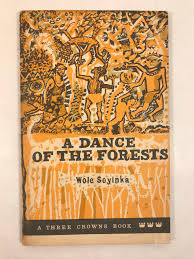
'A Dance of the Forests' by Wole Soyinka

          'A Dance of the Forests' by Wole Soyinka          


 Key points about Wole Soyinka: 

  • Wole Soyinka is a Nigerian writer, playwright, poet, and political activist. He was born in 1934 in Abeokuta, Nigeria.
  • He is regarded as one of the foremost figures in modern African literature. In 1986, he became the first African to be awarded the Nobel Prize in Literature.
  • His notable works include the plays "Death and the King's Horseman", "The Lion and the Jewel", and the novels "The Interpreters" and "Season of Anomy".
  • Many of his writings deal with the tensions and violence involved in the transition from colonial rule to independence in Nigeria and other African nations.
  • He was an outspoken critic of many Nigerian military dictatorships and their suppression of human rights. He was imprisoned for 22 months in the 1960s for speaking out against the Nigerian civil war.
  • In addition to the Nobel Prize, he has won many other prestigious awards including the Anisfield-Wolf Book Award and the Agatha Christie Award.
  • Stylistically, his works blend Western literary traditions with African folkloric storytelling techniques, Yoruba myths, and beliefs.
  • He is also a notable political activist who has campaigned for democracy, human rights, and freedom of expression across Africa for decades.

Key points about Wole Soyinka's play "A Dance of the Forests": 

  • It was written in 1960 and first performed in 1963 to celebrate Nigeria's independence from British colonial rule.
  • The play blends Greek tragedy, Yoruba folklore, and a non-linear plot to explore themes of responsibility, ritual, and Nigeria's pre-colonial past.
  • The main characters include the Court Historian and Spirit Champers who preside over a ritualistic re-enactment of the past involving Forest Dwellers and other spirit beings.
  • It examines the repeated cycle of human violence and cruelty throughout Nigeria's history, from its earliest origins to the colonial era.
  • Ritual plays a central role, with the opening ceremony intended to exorcise the evils of the past before Nigeria can move forward as an independent nation.
  • The play's non-linear structure, mixing of genres, and dense symbolism make it a complex, unconventional work regarded as Soyinka's first major artistic success.
  • Soyinka incorporates Yoruba myths, masques, drumming, dancing, and the Ogun cult into the theatrical production.
  • Themes include the continuity between the present and the past, the seductive nature of power and violence, and moral responsibility.
  • It has been praised for its poetic language and inventive theatrical style fusing African and European dramatic traditions.


Question: 
Write a proposed alternative end of the play 'A Dance of the Forest' by Wole Soyinka. 

As the ceremonial dance and ritual re-enactment of Nigeria's violent past reaches its climax, the Court Historian and Spirit Champers look on, hoping the exorcism will allow the nation to move forward unburdened. However, the Forest Dwellers and spirit beings do not disperse as expected.

Instead, the Forest Head pulls Demoke, symbol of the vicious cycle of human cruelty, from the sacrificial offerings. Demoke stands defiant, refusing to be subjugated or destroyed so easily. The Forest Head declares that the ills of the past cannot be simply wished away through ritual alone.

The spirits congregate and rather than exorcise Demoke, they begin integrating parts of him into themselves through a transformative dance. They decide Nigeria's future must directly reckon with and incorporate the harsh truths of its past.

As the dance reaches a frenzy, the Forest Dwellers and spirits merge into one composite spirit figure - part human, part nature deity. This new spirit being represents the synthesis of Nigeria's ancient roots and traditions with the unavoidable stains of its colonial subjugation and civil violence.

The Court Historian and Champers look on stunned as this new figure speaks in a multiplicity of voices. It says Nigeria's path forward requires embracing and transforming the whole truth of its history, not rejecting the ugly parts. Only through this can true independence be achieved.

The spirit figure then dissolves, leaving the elaborate masques and ceremonial props strewn about as if awaking from a dream. The Court Historian and Champers are left to ponder if the ritual failed or succeeded in its own twisted way, as the path to Nigeria's future has been forever altered.

Question: Write a note on the play 'A Dance of the Forest' by Wole Soyinka.


'A Dance of the Forests' by Wole Soyinka:

'A Dance of the Forests' by Wole Soyinka is a groundbreaking Nigerian play that amalgamates Yoruba folklore and rituals with elements of Western dramatic tradition. It was first performed in 1963 as part of the celebrations for Nigeria's independence from British colonial rule.

The play's structure deviates significantly from conventional Western plays. Instead of following a three or five-act linear narrative, it uses a non-linear, circular structure that shifts fluidly between the past and present. This structural technique highlights one of the main thematic concerns - the idea that history tragically repeats itself in a cyclical manner if humans fail to learn from past mistakes.

The main themes explored include: 

Nigeria's independence struggle and the need to accept responsibility for the nation's violent past instead of solely blaming colonial powers; the complex relationship between tradition and historical events; and the vital role of the artist in holding a mirror to society's ills.

Soyinka employs a brilliant contrast technique at multiple levels - juxtaposing the living and the dead characters, swinging between tragic and comic moments, portraying vibrant folk characters alongside sterile bureaucratic figures. This serves to create dramatic tension and variety.

The language too exhibits a wide range - from vivid poetic verses invoking ancestral spirits to crude insults exchanged by the sharp-tongued folk characters. Each character's speech style is distinct, rooted in their personality and background.

Perhaps the most innovative aspect is Soyinka's incorporation of traditional Yoruba performance arts like ritual ceremonies, masquerades, drumming and dance into the theatrical production. This gives the play a rich, multi-sensory quality that transcends the written text, making it a complete visually and aurally immersive experience for the audience.

In conceptualizing this play, Soyinka drew from both Western canon like the ancient Greek tragedies as well as his profound understanding of Yoruba myths, philosophy and aesthetics. His ambition was to authentically portray the African, specifically Yoruba, worldview on stage using the colonial English language as a creative paradox.

While being a pathbreaking work celebrated for forging a postcolonial theatrical idiom, 'A Dance of the Forests' also attracted criticism for its complex symbolism that bordered on obscurity, especially towards the enigmatic ending. However, Soyinka defended this obliqueness as a conscious artistic choice to set a thought-provoking "riddle" for the audience rather than simplistic spoon-feeding.

Fusion of Traditions: 

The play fuses Yoruba folklore, ritual, music, and dance with Western dramatic traditions. Soyinka blends indigenous African elements like Yoruba myths, masquerades, drumming, and dance with aspects of Western theatre.

Non-linear Structure: 

It doesn't follow the typical three or five-act structure, using a non-linear storyline shifting between past and present instead. The play's structure is unconventional, moving back and forth in time without a clear linear plot progression.

Themes: 

Main themes are Nigerian independence, tradition vs history, and the artist's role in society. The play explores Nigeria's independence struggle, the link between tradition and historical events, and the social responsibility of the artist.

Acceptance of History:
 
Soyinka suggests Nigerians must accept their own violent history instead of solely blaming colonialism. He argues that Nigerians need to take responsibility for their past injustices rather than putting all blame on colonial powers.

Repetition of History: 

Characters doubling up in past/present roles shows how history repeats if humans don't learn. By having characters play dual roles in different eras, Soyinka highlights the cycle of violence repeating across generations.

Contrasts: 

The play employs contrasts between living/dead, tragedy/comedy, vibrant/sterile characters. Soyinka uses contrasts in structure, tone, and characterization to create dramatic tension and variety.

Language Variety: 

Language ranges from poetic to graphic insults and diverse character speech styles. The play's language is diverse, including poetic verses, vivid insults, and varied speaking styles for different characters.

Sensory Experience: 

Incorporation of Yoruba rituals, dance, drumming makes it a rich sensory stage experience. The use of non-verbal Yoruba performance elements like rituals and dance make the play a multi-sensory theatrical work.

Postcolonial Amalgamation: 

It amalgamates Western and African dramatic techniques/philosophy using an English medium. Soyinka blends colonial English language with Yoruba folklore/aesthetics to create a unique postcolonial theatrical form.

Critical Reaction: 

While groundbreaking, its complex symbolism and obscure ending divided critics. The play's innovative style was praised but its obscure symbolism/ending also attracted criticism from some quarters.

Conclusion: 

The play remains a tour de force - a rich tapestry where Soyinka weaves together diverse cultural traditions into a unique theatrical expression that challenges both the colonial literary canon and ancestral traditions to forge an authentic, uncompromising postcolonial voice speaking in a borrowed language. Its ingenious blending of seemingly disparate elements continues to inspire generations of writers and academics exploring the intersections of language, culture and power dynamics.

PPT by Dr.Yesha Bhatt:


(WC: 1502, Images 03, Video 01)

'The Joys of Motherhood' by Buchi Emecheta

   'The Joys of Motherhood' by Buchi Emecheta   

Key points about Buchi Emecheta:

  • Nigerian novelist (1944-2017)
  • One of the most widely read African writers.
  • Her novels focused on child slavery, motherhood, female independence and freedom.
  • Notable works include Second Class Citizen, The Joys of Motherhood, The Bride Price.
  • Drew from personal experiences as an Nigerian immigrant in London.
  • Her writing explored issues of gender and racial inequality.
  • Was made an Officer of the Order of the British Empire (OBE) in 2005.
  • Seen as a pioneering figure in African literature and feminism.

Key points about Buchi Emecheta's novel The Joys of Motherhood:

  • Published in 1979, it is considered her best-known work.
  • Tells the story of Nnu Ego, a Nigerian woman in the 1900s struggling with the traditional role of motherhood.
  • Explores the conflict between urban life/modernity and traditional Igbo culture and values.
  • Depicts the hardships and sacrifices Nnu Ego makes to have children and be a devoted mother.
  • Critiques the patriarchal subjugation of women in Nigerian society at the time.
  • Shows how Nnu Ego is mistreated and taken for granted by her husband and sons.
  • Highlights the gender inequalities and lack of autonomy for women in their prescribed roles.
  • Seen as an early feminist work challenging conventional depictions of joyous motherhood.
  • Written in a simple, straightforward style drawing from oral storytelling traditions.
  • Provides insight into the changing roles and identity of African women in the 20th century.
“The most celebrated female character in African creative writing is the African mother.” by Marie A. Umeh according to this, is the character of Nnu Ego celebrating motherhood or not? Explain. 

No, the character of Nnu Ego in Buchi Emecheta's novel The Joys of Motherhood does not celebrate motherhood in the traditional sense, despite the title's suggestion. In fact, the novel critiques and challenges the idealized notion of joyous motherhood that is expected of women in Nigerian society.

Throughout the novel, Nnu Ego endures immense suffering, hardship, and disappointment as a result of her singular devotion to motherhood and her children. She makes countless sacrifices, is mistreated by her husband and sons, and lacks any autonomy or sense of self outside of being a mother.

Rather than depicting the "joys" of motherhood, the novel exposes the harsh realities and lack of fulfillment Nnu Ego experiences. Her role is one of subjugation, thanklessness, and drudgery within the patriarchal Igbo culture. She internalizes the belief that her worth and identity is solely tied to childbearing and raising children.

So while Marie A. Umeh accurately calls Nnu Ego "the most celebrated female character" in representing the African mother figure, Emecheta's portrayal does not celebrate motherhood itself. Instead, it provides a tragically realistic and feminist critique of the limits, burdens, and costs imposed on women by traditions that glorify motherhood while stripping away their other roles and rights.


The basic narrative lends itself toward neo-feminism. The main female characters struggle to shed the conditioning that forces them to act out roles that bring little fulfillment. With reference to this, study The Joys of Motherhood by applying a feminist theory.

The Joys of Motherhood by Buchi Emecheta lends itself well to a feminist literary analysis, particularly through the lens of neo-feminist theory. The novel explores the struggles of its main female characters, especially Nnu Ego, as they grapple with the oppressive gender roles and patriarchal conditioning imposed upon them by their traditional Igbo society.

At its core, the narrative challenges the notion that fulfillment for women can only be derived from adhering to prescribed roles like motherhood and servitude to men. Nnu Ego's life trajectory exemplifies the neo-feminist critique of such socially constructed ideals that limit women's autonomy and self-actualization.

From a young age, Nnu Ego is indoctrinated with the belief that her primary purpose is to bear children, especially sons, and to be a devoted wife and mother above all else. She internalizes these expectations, sacrificing her own dreams and aspirations in pursuit of the supposed "joys of motherhood." However, as the novel progresses, Emecheta exposes the harsh reality that this path brings Nnu Ego little joy or fulfillment, but rather a life of subjugation, exploitation, and thankless drudgery.

Neo-feminist theory argues that such oppressive gender roles are not biologically determined but are social constructs used to maintain male dominance and female subservience. Emecheta's portrayal of Nnu Ego's suffering and the mistreatment she endures from her husband and sons exemplifies this systemic oppression of women within the patriarchal Igbo culture.

The novel also touches on the intersection of gender and class oppression, as Nnu Ego's lower socioeconomic status further exacerbates her lack of agency and autonomy. Her struggles to shed the conditioning that forces her into unfulfilling roles highlight the neo-feminist call for women to liberate themselves from such restrictive gender norms and societal expectations.

Emecheta's inclusion of other female characters like Nnu Ego's daughter, Adaku, who defies traditional gender roles by pursuing education and a career, serves as a counterpoint and represents the neo-feminist ideals of female empowerment and self-determination.

The Joys of Motherhood provides a poignant and critical examination of the oppressive forces that subjugate women through the lens of neo-feminist theory. Emecheta's narrative challenges the very notion of "joys" associated with motherhood when it is reduced to a limiting and unfulfilling role, and instead advocates for women's liberation from such restrictive gender conditioning.

“The title of Emecheta's novel is patently ironic, for it would seem that there are few joys associated with motherhood after all.” Explain.

This statement accurately points out the ironic contrast between the title "The Joys of Motherhood" and the actual depiction of motherhood in Buchi Emecheta's novel. The title suggests a celebratory exploration of the happiness and fulfillment that comes with being a mother. However, the novel itself paints a very different, bleak picture of the character Nnu Ego's experience as a mother.

Far from portraying the "joys" of motherhood, the narrative exposes the immense hardships, sacrifices, oppression and lack of autonomy that Nnu Ego faces in her singular pursuit of children and performance of her prescribed gender role.

Some key examples that highlight the irony of the title:

1) Nnu Ego endures a difficult labor delivering her first child, foreshadowing the suffering motherhood will bring her.

2) She is forced into an abusive marriage where she is mistreated by her husband, Nnaife, who takes her for granted.

3) She makes countless personal sacrifices, forgoing her own ambitions, to have multiple children and be an ever-dutiful mother.

4) Despite her devotion, she is disrespected and receives little gratitude from her patriarchal household, especially from her sons.

5) She descends into poverty and destitution while trying to provide for her children, showing the economic burdens of motherhood.

6) In the end, her children largely neglect and abandon her in her old age after all she has sacrificed.

The ironic title "The Joys of Motherhood" stands in stark contrast to the harsh realities and profound suffering experienced by the protagonist Nnu Ego in Buchi Emecheta's novel. This dissonance between the title's implication and the narrative's actual portrayal of motherhood highlights the deeply critical lens through which Emecheta examines the oppressive gender roles and patriarchal subjugation imposed on women in traditional Igbo society.

The title evokes an expectation of a celebratory exploration of the happiness, fulfillment, and sense of purpose that motherhood is supposed to bring to a woman's life according to cultural norms. However, Emecheta's novel subverts this idealized notion, laying bare the myriad hardships, sacrifices, and fundamental lack of joy that Nnu Ego endures as she singularly devotes herself to her prescribed role as a mother and wife.

From the very beginning, Nnu Ego's experience with motherhood is marked by pain and suffering, foreshadowing the harsh realities to come. Her difficult labor and the complications she faces in delivering her first child serve as an ominous precursor to the trials and tribulations that motherhood will unleash upon her life. This initial struggle contrasts starkly with the title's promise of "joys."

As the narrative progresses, Emecheta unflinchingly depicts the multitude of ways in which Nnu Ego's identity, autonomy, and sense of self are systematically stripped away by the oppressive patriarchal structures of her society. She is forced into an abusive marriage, mistreated and disrespected by her husband, and expected to make countless personal sacrifices, forgoing her own ambitions and dreams, in service of childbearing and motherhood.

Despite her unwavering devotion and the immense burdens she shoulders, Nnu Ego receives little gratitude or appreciation from her household, particularly from her sons who take her for granted and ultimately neglect her in her old age. This ingratitude and lack of fulfillment further compounds the irony of the novel's title, as the "joys" promised are utterly absent from Nnu Ego's lived experience as a mother.

Emecheta's portrayal highlights the economic hardships and descent into poverty that Nnu Ego endures in her relentless pursuit of motherhood. The immense financial strain and destitution she faces serve as a poignant reminder of the material costs and sacrifices women are expected to bear under the guise of finding joy and purpose through their prescribed gender roles.

By juxtaposing the idealized expectations set by the title with Nnu Ego's harrowing and joyless reality, Emecheta crafts a powerful indictment of the patriarchal systems that oppress and exploit women through the glorification of motherhood. The irony of the title underscores the novel's overarching critique of the ways in which women are subjugated and denied autonomy and fulfillment in service of narrow gender roles that ultimately bring them little but suffering and disillusionment.

Through this striking contrast, Emecheta effectively dismantles the myth of the "joys of motherhood" and instead exposes the harsh truths and profound costs that women like Nnu Ego are forced to bear in the name of cultural traditions and gender norms that prioritize their roles as mothers above all else.

Nnu Ego dies, at the end of the story, a lonely death “with no child to hold her hand and no friend to talk to her. She had never really made many friends, so busy had she been building up her joys as a mother” justify this statement by giving illustrations from the novel.

The tragic and lonely death of Nnu Ego at the end of the novel powerfully reinforces the irony of the title "The Joys of Motherhood" and highlights the ultimate futility of her singular devotion to motherhood. The quote you provided, "with no child to hold her hand and no friend to talk to her. She had never really made many friends, so busy had she been building up her joys as a mother," encapsulates the devastating consequences of Nnu Ego's blind adherence to her prescribed gender role at the expense of her own identity and relationships.

Throughout the novel, Emecheta illustrates how Nnu Ego's relentless pursuit of motherhood and her internalization of cultural expectations forces her to sacrifice her own dreams, ambitions, and personal connections. This is exemplified by several key moments:

1. Abandoning her goal of becoming a civil servant to marry at a young age and start having children, as dictated by tradition.
2. Enduring an abusive and unfulfilling marriage to Nnaife solely for the purpose of bearing and raising children.
3. Neglecting friendships and social connections, as she was "so busy building up her joys as a mother."
4. Tolerating mistreatment from Nnaife and her sons, who take her sacrifices for granted, in the name of preserving her role as a devoted mother.

Emecheta's portrayal highlights how Nnu Ego's identity becomes inextricably tied to motherhood, leaving no room for her individuality or the cultivation of meaningful relationships outside of her children. This narrow focus on her prescribed role as a mother ultimately leaves her isolated and alone in her final moments.

The poignant description of Nnu Ego's lonely death, "with no child to hold her hand and no friend to talk to her," serves as a devastating indictment of the supposed "joys" promised by the title. Despite her unwavering commitment to motherhood, she is abandoned and neglected by the very children she sacrificed everything for, underscoring the harsh reality that her devotion to this role brought her no lasting fulfillment or sense of purpose.

The fact that "she had never really made many friends" further emphasizes the profound isolation and lack of human connection that Nnu Ego experiences as a result of her singular pursuit of motherhood. By forsaking all other aspects of her identity and relationships, she is left utterly alone in her final moments, surrounded by neither the children she devoted her life to nor the friends she never had the opportunity to make.

Emecheta's decision to conclude the novel with this heartbreaking scene of Nnu Ego's solitary death poignantly reinforces the central critique of the oppressive gender roles and cultural expectations that robbed her of true joy, autonomy, and human connection. The ironic title serves as a haunting reminder of the false promise of fulfillment through motherhood alone, as Nnu Ego's tragic end exemplifies the profound emptiness and lack of lasting "joys" that such a limiting existence ultimately brings.

Do you agree with the statement that “Emecheta attempts to expose the gender politics operating within indigenous Africa” in The Joys of Motherhood? Justify your agreement or disagreement with illustrations.

Do you agree with the statement that “Emecheta attempts to expose the gender politics operating within indigenous Africa” in The Joys of Motherhood? Justify your agreement or disagreement with illustrations.

Yes, I would agree that through The Joys of Motherhood, Buchi Emecheta attempts to expose and critique the deeply entrenched gender politics and patriarchal structures operating within indigenous African societies, specifically the traditional Igbo culture depicted in the novel. Emecheta uses the tragic story of Nnu Ego's life to lay bare the oppressive gender norms, systemic inequalities, and lack of autonomy imposed on women by these indigenous value systems. Several key illustrations from the novel support this:

1. The rigid gender roles: From a young age, Nnu Ego is indoctrinated with the singular goal of becoming a wife and mother above all else. Her ambition to become a civil servant is dismissed as "unsuitable" for a woman. This highlights how women's roles are strictly limited by societal expectations.

2. Subjugation through marriage: Nnu Ego's marriage to Nnaife exemplifies the subservient position of wives in Igbo culture. She is mistreated, beaten, and her identity is subsumed by her role as a mother and Nnaife's property.

3. Lack of reproductive autonomy: Nnu Ego's worth is solely derived from her ability to bear children, especially male children to carry on the family name. She has no choice but to continue having babies to fulfill this duty.

4. Economic dependence: Despite her hard work and sacrifices, Nnu Ego has no financial independence or control over resources, leaving her trapped in poverty and reliant on the men in her life.

5. Intergenerational oppression: Emecheta shows how these patriarchal values are passed down, as Nnu Ego's sons adopt the same entitled attitudes towards their wives, continuing the cycle of female subjugation.

Through Nnu Ego's suffering and the intersecting layers of oppression she faces as a woman in Igbo society, Emecheta exposes the deep-rooted gender politics that strip women of agency, self-determination, and basic human rights.

Moreover, the novel contrasts Nnu Ego's oppression with the example of her educated, independent daughter Adaku, who defies traditional gender norms. This juxtaposition reinforces Emecheta's critique of indigenous customs that confine and dehumanize women.

By giving an uncompromising portrayal of the harsh realities faced by women like Nnu Ego, Emecheta effectively dismantles the romanticized notions of African womanhood and motherhood. Instead, she exposes the profoundly unequal gender politics ingrained within indigenous cultures like the Igbo, where women are systematically marginalized and their value is reduced to their reproductive capabilities.

Emecheta's searing narrative acts as a clarion call to challenge and dismantle these oppressive gender norms and power structures that have been perpetuated by traditional African value systems for far too long.

Conclusion:

Buchi Emecheta's The Joys of Motherhood serves as a powerful feminist critique exposing the oppressive gender politics and patriarchal structures within indigenous African societies like the Igbo culture depicted. Through Nnu Ego's tragic life devoted singularly to motherhood, Emecheta undercuts romanticized notions to reveal the harsh realities of female subjugation, lack of autonomy, and profound isolation this prescribed role brings. The novel's ironic title reinforces Emecheta's dismantling of traditional gender norms and advocates for women's liberation from such dehumanizing cultural constraints on their identity and purpose.

PPT by Dr. Yesha Bhatt


(WC: 2451, Photos 03, Video 01)

Thank you for visiting, I hope you got fruitful information.

Read More :

Teachers' Day Celebration- 2026