Analysis of W. B. Yeats’s Poem ‘The Second Coming'
W. B. Yeats:
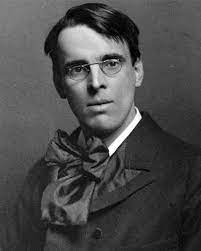
William Butler Yeats was born on June 13, 1865, in Dublin, Ireland. John Butler Yeats, his father, was a lawyer and artist, and his mother, Susan Pollexfen Yeats, came from a wealthy family. Yeats spent a large part of his childhood in County Sligo, where he became interested in Irish folklore and the supernatural.
Yeats enrolled at the Metropolitan School of Art in Dublin in 1884 to study painting. He also started writing poetry and joined the Irish Literary Society. He met poet and playwright George Russell (writing under the pen name AE) in 1887, and the two became close friends and collaborators.
Yeats's first book of poetry, "The Wanderings of Oisin and Other Poems," was published in 1891. The collection drew on Irish mythology and legends and established Yeats as a leading figure in the Irish Literary Revival. He continued to write poetry throughout his life, publishing numerous collections, including "The Wind Among the Reeds" (1899), "In the Seven Woods" (1903), and "The Tower" (1928).
In 1899, Yeats co-founded the Irish National Theatre Society, which later became the Abbey Theatre. He wrote many plays for the company, including "The Countess Cathleen" (1892), "The Land of Heart's Desire" (1894), and "Cathleen Ni Houlihan" (1902). His plays often explored themes of Irish nationalism, Irish folklore, and the occult.
Yeats was also interested in mysticism and the supernatural, and he became involved in the Hermetic Order of the Golden Dawn, a secret society that practised ritual magic. His interest in these subjects is reflected in his later poetry, which often deals with the occult and esoteric themes.
In 1917, Yeats married Georgie Hyde-Lees, with whom he had two children. He also became involved in Irish politics and was a member of the Irish Republican Brotherhood. In 1922, he was appointed to the Irish Senate and served until his death in 1939.
Yeats was awarded the Nobel Prize in Literature in 1923, becoming the first Irishman to receive the honour. He died on January 28, 1939, in Roquebrune-Cap-Martin, France, and was buried in Drumcliffe Churchyard in County Sligo, Ireland. Today, he is regarded as one of the most important poets of the 20th century and a major figure in Irish literature and culture.
Yeats remains a highly regarded and influential figure in modern literature, and his work continues to be studied and celebrated around the world.
William Butler Yeats was a prolific writer, and his body of work includes poetry, plays, essays, and other writings.
List of Yeats’s works:
Poetry:
"The Wanderings of Oisin and Other Poems" (1891)
"The Countess Kathleen and Various Legends and Lyrics" (1892)
"The Celtic Twilight" (1893)
"In the Seven Woods" (1903)
"Responsibilities" (1914)
"The Wild Swans at Coole" (1919)
"Michael Robartes and the Dancer" (1921)
"The Tower" (1928)
"The Winding Stair and Other Poems" (1933)
"Last Poems" (1938)
Plays:
"The Countess Cathleen" (1892)
"The Land of Heart's Desire" (1894)
"Cathleen ni Houlihan" (1902)
"The Hour Glass" (1904)
"On Baile's Strand" (1904)
"Deirdre" (1907)
"The Green Helmet" (1910)
"The Only Jealousy of Emer" (1919)
"The Dreaming of the Bones" (1919)
Essays:
"The Celtic Revival" (1892)
"The Symbolism of Poetry" (1900)
"Ideas of Good and Evil" (1903)
"The Irish Dramatic Movement" (1903)
"Per Amica Silentia Lunae" (1918)
"A Vision" (1925)
Other writings:
"Fairy and Folk Tales of the Irish Peasantry" (1888)
"John Sherman and Dhoya" (1891)
"Stories of Red Hanrahan" (1897)
"The Secret Rose" (1897)
"Discoveries" (1907)
"The King of the Great Clock Tower" (1934)
Theme:
The central theme of W.B. Yeats' poem "The Second Coming" is an apocalyptic vision of a world out of control, as well as a warning that a new order may emerge from the chaos.
The poem's first stanza paints a bleak picture of the world, with the falcon and falconer symbolising the breakdown of traditional order as the bird flies away beyond the human master's control. The centre can no longer withstand the pressure, and chaos looms, represented by images of anarchy, violence, and disorder.
In the second stanza, Yeats invokes the image of a "rough beast" that is slowly making its way toward Bethlehem, waiting to be born. This beast is a symbol of the new order that will emerge from the chaos and destruction of the old world. The speaker warns that the beast is not benign, but instead represents a threat to traditional values and beliefs.
The theme of W.B. Yeats' poem "The Second Coming" is about the cyclical nature of history, the breakdown of traditional order, and the potential for a new and destructive order to emerge from the chaos. The poem suggests that the world is in crisis, and that the old order is breaking down, leading to anarchy and violence. The speaker warns that a "rough beast" is approaching, symbolising the emergence of a new order, which is not necessarily benevolent or in keeping with traditional values.
The poem reflects Yeats' sense of the turmoil and upheaval of his time, marked by the aftermath of World War I, the rise of fascism and totalitarianism, and the collapse of traditional social and moral values. The poem suggests that history is cyclical and that the old order is always vulnerable to collapse and destruction, leading to the potential for a new and destructive order to emerge. The poem's overall message is one of warning and caution, as the speaker recognizes the fragility of human civilization and the potential for it to collapse in the face of powerful historical forces.
Poetic Devices :
Imagery:
The poem makes use of vivid and evocative images to convey a sense of chaos, destruction, and impending doom. Examples include "the falcon cannot hear the falconer," "mere anarchy is loosed upon the world," and "The blood-dimmed tide is loosed, and everywhere / The ceremony of innocence is drowned.
Symbolism:
The falcon and falconer symbolise the breakdown of traditional order, while the "rough beast" represents the emergence of a new and destructive order. Bethlehem symbolises the birthplace of Christianity and the possibility of redemption.
Metaphor:
The poem uses metaphor to compare the breakdown of traditional order to the widening gyre of a falcon, as well as to compare the new and destructive order to a "rough beast."
Allusion:
The poem alludes to the biblical story of the birth of Christ in Bethlehem, as well as to the idea of a "second coming" or apocalyptic event.
Repetition:
The phrase "Things fall apart" is repeated twice in the poem, emphasising the theme of the breakdown of traditional order.
Rhyme:
The poem uses a loose rhyme scheme of ABAB for the first three stanzas, and then a more irregular rhyme scheme for the final stanza.
Gyre:
“Turning and turning in the widening gyre
The falcon cannot hear the falconer;”
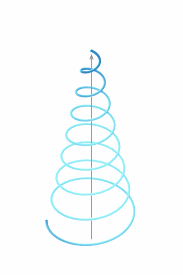
A gyre is a spiral cone shape and part of Yeats's complicated view of mysterious historical forces. As one gyre of history gives way, another one takes over.
Yeats is thinner in his writings than in his talk; very little of himself goes into his literature.
Similarly it may be said very truly that he is " thinner " in his verse than in his prose.
Yeats employs in the first line (denoting circular motion and repetition) a nod to Yeats’s mystical belief that history repeats itself in cycles.
Yeats regrets that the man has become from the restraints of morality , religion and discipline.
It is preoccupied with image , symbol , imagination , poetic process , and the role of the poet . It is more , however , than a disquisition on poetry , although it is less than a key to total understanding of the poems . Sometimes bewildering and arbitrary but always absorbing , the book does manage to lock together the fragments of Yeats ' vision of the universe.
Yeats incorporates his own view of history and future through the image of the " gyres " , cone - shaped spirals that intersect so that each gyre's narrowest point is contained inside the widest part of the other.
Spiritus Mundi:
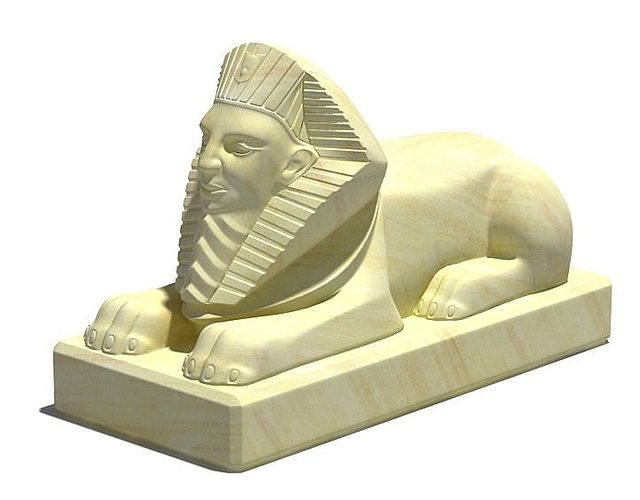
The second part sounds Christian in the beginning , but develops an image whose source is not Scripture but Spiritus Mundi , and which concerns something like an Egyptian Sphinx , and the passing of Christ in his favour.
Spiritus Mundi is the term he used for this collective unconscious.
With its animal body and human head, perhaps this beast says something about the "nightmare" to come. Though humans have tried to civilise themselves and improve their world, perhaps their more beastly animal nature has only been hidden, not defeated.
This type of hybrid creature is quite common in various mythologies, and is meant to convey a kind of freakishness, a sense of nature somehow going wrong.
Thus the image symbolises the coming historical phase of evil.
But the Beast is not imitating Christ's Second Coming at all . It is imitating his first coming.
Bethlehem:

Christians believe that Bethlehem is the birthplace of Jesus Christ, the son of God. It is situated in the region that is today known as Palestine.
Thus Yeats can describe the second coming with an exhilaration not unlike the excitement and sense of pending rebirth which has accompanied our horror at the events which have destroyed American complacency in the last few years.
The Second Coming is the Christian idea that Jesus will someday return to the earth and save those who are worthy.
It was written soon after the end of World War I, during which millions of people died in battle and millions more from its fallout. This immense devastation was a stark reminder of humanity's capacity for self-destruction.
Conclusion:
"The Second Coming" by W.B. Yeats is a powerful and evocative poem that reflects the early twentieth century's sense of turmoil and upheaval. To convey its themes of the cyclical nature of history, the breakdown of traditional order, and the potential for a new and destructive order to emerge from the chaos, the poem employs a variety of poetic devices, including vivid imagery, powerful symbolism, and effective use of metaphor, allusion, repetition, rhyme, and enjambment. The poem warns of the fragility of human civilization and the need to be vigilant against the forces that threaten to destroy it through its vivid and haunting language.
(Words 1700 ; Images 04)
Works CitedCarberg, Joan S. “‘A Vision’ by William Butler Yeats.” Daedalus, vol. 103, no. 1, 1974, pp. 141–56. JSTOR, http://www.jstor.org/stable/20024196. Accessed 27 Mar. 2023.
Hexter, George J. “THE PHILOSOPHY OF WILLIAM BUTLER YEATS.” Texas Review, vol. 1, no. 3, 1916, pp. 192–200. JSTOR, http://www.jstor.org/stable/43465700. Accessed 27 Mar. 2023.
Mamta. “A Study of Indian Philosophical Thoughts in W.B. Yeats' Poetry.” IJESC, March 2021, https://ijesc.org/upload/27d404039c911aae401e0331cd567143.A%20Study%20of%20Indian%20Philosophical%20Thoughts%20in%20W.B.%20Yeats%20Poetry.pdf. Accessed 27 March 202.
Ransom, John Crowe. “Yeats and His Symbols.” The Kenyon Review, vol. 1, no. 3, 1939, pp. 309–22. JSTOR, http://www.jstor.org/stable/4332091. Accessed 27 Mar. 2023.
Yeats, William Butler, and WB Yeats. “The Second Coming by William Butler Yeats.” Poetry Foundation, https://www.poetryfoundation.org/poems/43290/the-second-coming. Accessed 27 March 2023.